

Electrical
Lightning and Power Surges: Protecting Your Jacksonville Home in the Lightning Capital
Florida leads the nation in lightning. How power surges damage AC units, appliances, and EV chargers, and why whole-home surge protection is worth adding.
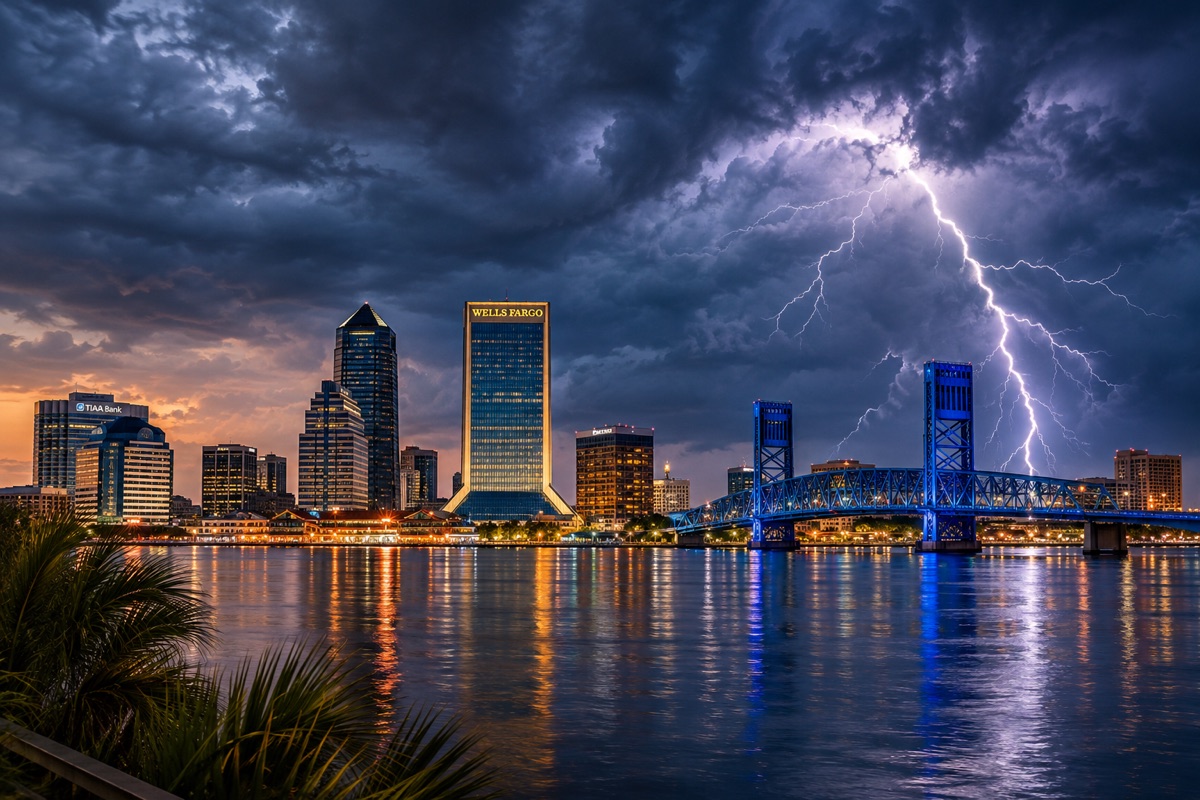
Anyone who’s lived through a Jacksonville summer knows the routine: blue skies in the morning, a wall of thunderstorms by mid-afternoon. Florida sees more lightning than any other state, and it has earned its reputation as the lightning capital of the country.
Most homeowners think about lightning as a safety issue (and it is). But lightning and the power surges that come with it are also one of the most common causes of damaged electronics, fried AC components, and dead appliances in Northeast Florida homes. The damage is often expensive, sometimes invisible at first, and largely preventable.
What Is a Power Surge?
A power surge is a brief spike in voltage, lasting a tiny fraction of a second, well above the normal 120 or 240 volts your home is designed for. Your electronics can handle small fluctuations, but a large surge can overwhelm and destroy sensitive components instantly. Smaller, repeated surges cause gradual wear that shortens equipment life.
Surges come from two directions:
Surges From Outside the Home
- Lightning strikes on or near power lines, transformers, trees, or the ground near your home. A strike doesn’t need to hit your house to send a damaging surge through your wiring, cable, or phone lines.
- Utility grid events such as switching, equipment failures, downed lines, and power being restored after an outage, which is common during storm season.
Surges From Inside the Home
Many surges are actually generated inside your own house. Every time a large motor-driven appliance like your AC compressor, refrigerator, well pump, or pool pump starts or stops, it can create small voltage spikes on your wiring. These internal surges are smaller than a lightning-driven event, but they happen many times a day, every day.
What Surges Damage in a Florida Home
Modern homes are packed with electronics, and today that includes appliances you might not expect.
AC Systems and Heat Pumps
Your air conditioner is one of the most surge-vulnerable and expensive pieces of equipment you own. Today’s systems use circuit boards, variable-speed motors, and inverter-driven compressors, all of which are sensitive to voltage spikes. Common surge-related failures include:
- Fried control boards in the outdoor unit or air handler
- Failed capacitors and contactors
- Damaged blower motors
- Compressor damage, which can mean replacing the entire outdoor unit
In Jacksonville, where an AC failure in August is more than an inconvenience, protecting your system is worth serious consideration.
Appliances
Refrigerators, washers, dryers, dishwashers, ovens, and microwaves now rely on electronic control boards. A surge can knock out a board and leave an otherwise good appliance dead, often at a repair cost that makes replacement tempting.
EV Chargers
A Level 2 EV charger is a sophisticated piece of electronics connected to a high-power circuit, and it’s connected to your vehicle while charging. Surge protection helps protect both the charger and the car’s onboard charging equipment. (Learn more in our EV home charging guide.)
Electronics and Smart Home Devices
TVs, computers, gaming consoles, routers, security systems, garage door openers, smart thermostats, and pool and irrigation controllers are all vulnerable. Surges can also enter through cable, satellite, and phone lines, not just power outlets.
Whole-Home Surge Protection vs. Plug-In Surge Strips
There’s a lot of confusion here, so let’s clear it up.
Plug-In Surge Protector Strips
The surge strip under your desk or behind your TV is a point-of-use device. It protects only what’s plugged into it.
Limitations:
- It does nothing for hardwired equipment like your AC, water heater, EV charger, pool equipment, or built-in appliances.
- Many inexpensive “power strips” offer little or no surge protection at all.
- The protective components wear out with each surge they absorb. Many strips keep passing power long after their surge protection is gone, and you may never know.
Tips if you use them:
- Look for a UL 1449 listing and a protection indicator light.
- Check the clamping voltage (lower is better) and joule rating (higher is better).
- Replace strips after a major storm event, a known surge, or every few years.
Whole-Home Surge Protection
A whole-home surge protective device (SPD) is installed at or in your electrical panel. It intercepts surges coming into your home from the utility and diverts excess voltage safely to ground before it reaches your circuits.
Why it matters:
- It protects every circuit in the home, including hardwired equipment like your AC, water heater, EV charger, and pool pump.
- It’s the first line of defense against large external surges from lightning and the grid.
- It’s a relatively affordable upgrade compared to the equipment it protects, often less than the cost of a single AC control board repair.
The Best Approach: Layered Protection
The most effective setup uses both:
- Whole-home protection at the panel to stop large surges at the point of entry.
- Quality point-of-use surge strips for sensitive or expensive electronics, which also help with smaller internal surges.
If your home has cable, satellite, or wired internet coming in, make sure those lines are properly grounded and protected as well, since surges can enter through them too.
A Note on Direct Lightning Strikes
No surge protector can guarantee protection against a direct lightning strike to your home. That’s an enormous amount of energy. Surge protection is designed for the far more common scenario: nearby strikes and grid disturbances that send surges through your utility connection.
For homes in highly exposed locations, a professionally designed lightning protection system (lightning rods, conductors, and grounding) can be considered, but for most Jacksonville homeowners, whole-home surge protection plus proper grounding is the practical, cost-effective step.
Your Grounding System Matters
A surge protector diverts excess voltage to ground. If your home’s grounding and bonding system is missing, corroded, loose, or outdated, surge protection can’t do its job effectively.
This is especially worth checking in:
- Older homes, where grounding may not meet today’s standards
- Homes where cable, phone, or satellite lines were added without proper bonding
- Coastal homes, where salt air can corrode grounding connections
A licensed electrician can inspect your grounding and bonding as part of a surge protection installation.
Surge Protection Is Now Required for New and Replaced Services
Surge protection isn’t just a good idea anymore. The 2020 edition of the National Electrical Code (NEC), the basis for Florida’s current electrical requirements, requires a surge protective device for dwelling unit services. In practical terms, if you’re:
- Building a new home
- Upgrading or replacing your electrical service
- Replacing your main panel as part of a service change
…surge protection is generally required as part of the work. If you’re planning a panel upgrade (see our panels and breakers guide), surge protection should be included in the quote.
If your home’s service hasn’t been updated in years, you likely don’t have whole-home surge protection, and adding it doesn’t require replacing your panel.
Signs You May Have Had a Surge
Surge damage isn’t always obvious. Watch for:
- Electronics or appliances that stop working after a storm
- Devices that act erratically or reset themselves
- Tripped breakers or GFCI outlets after a storm
- Burning smells near outlets, appliances, or the panel
- Surge strip indicator lights that are off
- An AC that won’t start or runs but doesn’t cool after a thunderstorm
If you notice burning smells, scorch marks, or warm outlets, shut off the affected circuit and call a licensed electrician.
Lightning Safety Reminders
While you’re protecting your equipment, protect your family too:
- When thunder roars, go indoors. If you can hear thunder, you’re close enough to be struck.
- Avoid using corded phones, wired electronics, and plumbing (showers, sinks) during a storm.
- Stay off porches and away from windows and doors.
- Wait at least 30 minutes after the last thunder before heading back outside.
- Never touch downed power lines or anything in contact with them.
How Copper & Co. Can Help
Copper & Co. helps Jacksonville homeowners protect their homes and equipment with:
- Whole-home surge protection installation
- Grounding and bonding inspections and upgrades
- Panel upgrades and service replacements, with code-required surge protection included
- Dedicated surge protection for AC systems and EV chargers
- Post-storm electrical inspections and repairs
Related reading: Hurricane Season Prep for Your Home’s Electrical System and All About Panels and Breakers: A Jacksonville Homeowner’s Guide
Frequently asked questions
Do I need whole-home surge protection if I already use surge strips?
Yes. Surge strips protect only what's plugged into them and do nothing for hardwired equipment like your AC, water heater, EV charger, or pool pump. A whole-home device at the panel stops large surges at the point of entry, and quality strips add a second layer for sensitive electronics.
Will a surge protector protect my home from a direct lightning strike?
No surge protector can guarantee that. Surge protection is designed for the far more common case: nearby strikes and grid disturbances that send surges through your utility connection.
Can a power surge damage my air conditioner?
Yes. Modern AC systems and heat pumps use circuit boards, variable-speed motors, and inverter-driven compressors that are sensitive to voltage spikes. Common surge damage includes fried control boards, failed capacitors and contactors, damaged blower motors, and compressor failure.
Do I have to replace my panel to add whole-home surge protection?
No. A whole-home surge protective device can usually be added to your existing panel. If you're upgrading or replacing your service anyway, surge protection is generally required as part of that work.
How do I know if my home had a power surge?
Watch for electronics or appliances that stop working or act erratically after a storm, tripped breakers or GFCI outlets, surge strip indicator lights that are off, an AC that won't start, or burning smells. If you notice burning smells, scorch marks, or warm outlets, shut off the circuit and call a licensed electrician.
How often should I replace plug-in surge strips?
After a major storm event or a known surge, or every few years. Their protective components wear out with each surge they absorb, and many keep passing power after their protection is gone.