

Home & Business
Buying or Insuring an Older Jacksonville Home: The 4-Point Inspection Explained
Buying or insuring an older Jacksonville home? What a 4-point inspection checks, the electrical and HVAC issues insurers flag, and how to fix them.
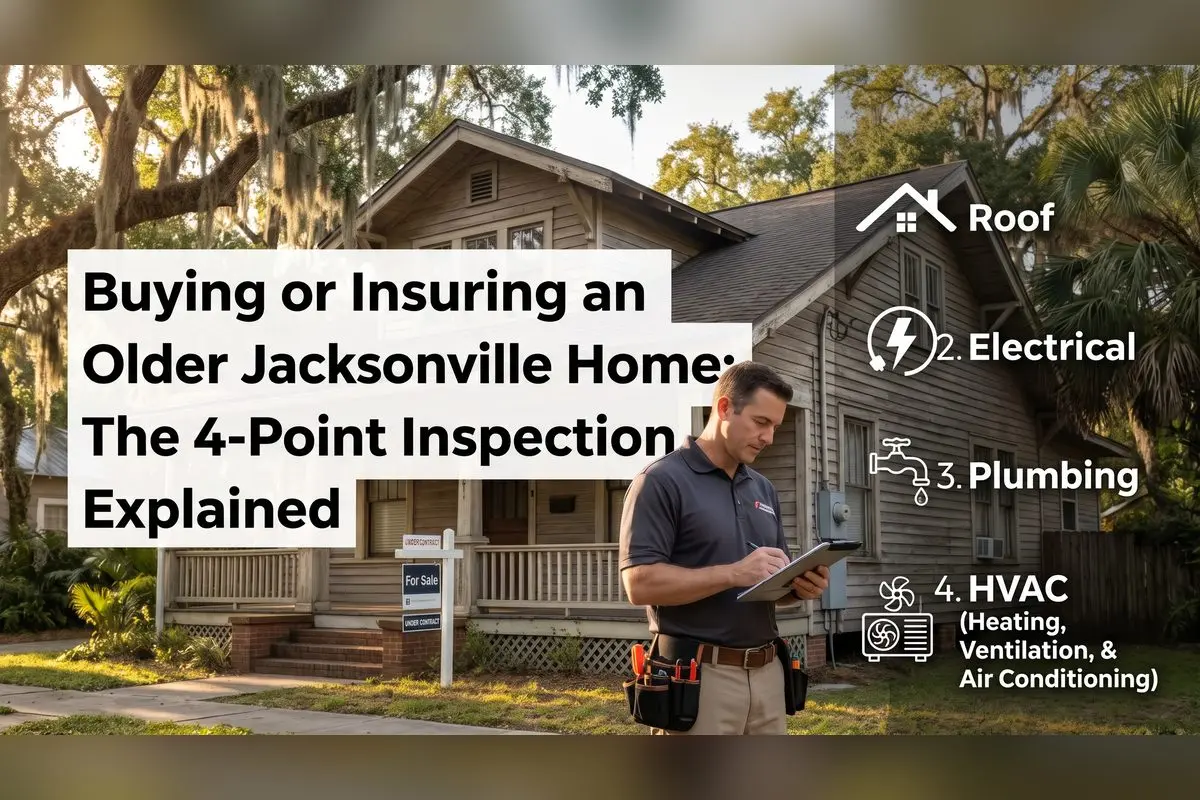
Jacksonville is full of older homes with real character: 1920s bungalows in Riverside and Springfield, mid-century ranches in San Marco, Ortega, and Lakewood, and block homes from the ’60s and ’70s across Arlington and the Westside. They’re great houses. But if you’re buying one, or trying to keep insurance on one you already own, you’ll probably run into the 4-point inspection.
A 4-point inspection can be the difference between getting a policy and getting a denial letter. The good news is that most problems it uncovers are fixable, and knowing what insurers look for ahead of time can save you a lot of stress, especially during a home purchase with a closing date on the calendar.
What Is a 4-Point Inspection?
A 4-point inspection is a short, focused report that documents the age, type, and condition of four major systems in a home:
- Roof
- Electrical
- Plumbing
- HVAC (heating and air conditioning)
Insurance companies use it to decide whether a home is an acceptable risk to insure. It’s performed by a Florida-licensed inspector and usually includes photos of each system, especially the electrical panel, water heater, and HVAC equipment.
A 4-point is not a full home inspection. It doesn’t evaluate the foundation, windows, appliances, drainage, or most of the house. If you’re buying, you still need a full home inspection to know what you’re buying. The 4-point is for the insurance company.
It’s also different from a wind mitigation inspection. A 4-point affects whether you can get insured; a wind mitigation report affects how much your hurricane premium costs. Most buyers of older homes order both, often on the same visit.
When Is a 4-Point Inspection Required?
There’s no Florida law requiring a 4-point inspection. The requirement comes from each insurance company’s underwriting rules, which means the same home might need one with one carrier and not another.
As a general guide:
- Citizens Property Insurance requires a 4-point inspection for homes more than 20 years old.
- Many private carriers require one for homes roughly 25 to 30+ years old.
- Some carriers request one at renewal, not just on new policies.
In Jacksonville, that covers a huge share of the housing stock. If your home was built before the mid-2000s, expect the question to come up.
What the Inspector Looks at: Electrical
The electrical section is one of the most common reasons a home runs into trouble with insurers. The inspector documents:
- Panel brand and model
- Service size (amperage)
- Type of wiring throughout the home
- Visible hazards such as double-tapped breakers, scorch marks, exposed wiring, or corrosion
- Age of the panel and any updates
Electrical Red Flags That Commonly Cause Insurance Problems
Federal Pacific Electric (FPE) Stab-Lok panels. Installed widely from the 1960s into the 1980s, these panels have a long-standing reputation for breakers that may not trip when they should. Most Florida insurers will decline coverage or require replacement.
Zinsco and Sylvania-Zinsco panels. Known for breakers that can fuse to the bus bar, along with corrosion issues that Florida humidity makes worse. Treated much the same as FPE by most carriers.
Fuse boxes. Many insurers won’t write a policy on a home still running on fuses instead of breakers.
Aluminum branch wiring. Common in Florida homes built from the mid-1960s to mid-1970s. Aluminum wiring isn’t automatically disqualifying, but insurers typically want to see it remediated by a licensed electrician using approved repair methods like COPALUM crimps or AlumiConn connectors, with documentation. (Our aluminum wiring guide covers this in depth.)
Knob-and-tube and cloth-insulated wiring. Found in some of Jacksonville’s oldest homes, especially in historic neighborhoods. Most insurers won’t accept active knob-and-tube wiring.
Undersized service. Older 60-amp or 100-amp services may be flagged, particularly if the home has been expanded or has had major appliances added over the years.
Other hazards inspectors frequently note: double-tapped breakers, missing knockouts or panel covers, rust or water intrusion inside the panel, DIY wiring, and signs of overheating.
Some panel brands, like certain older Challenger panels, fall into a gray area where acceptance varies by carrier. If you’re unsure about your panel, a licensed electrician can identify it and tell you whether it’s likely to cause problems. (See All About Panels and Breakers for more.)
What the Inspector Looks at: HVAC
The HVAC section is usually more straightforward, but it still matters. The inspector documents:
- Whether the home has central air and heat in good working order
- Age of the system, typically taken from the equipment data plate
- Condition, including signs of leaks, rust, or damage
- Condensate drainage, including evidence of water around the air handler or a rusted, overflowing drain pan
HVAC Issues That Can Cause Problems
- A system that isn’t working at the time of inspection
- Very old equipment near or past the end of its typical service life
- Visible water damage at the air handler, drain pan, or ceiling below it
- No permanent heat source. Some carriers require a working, permanently installed heating system, even in Florida
- Obvious hazards, such as damaged electrical connections at the condenser or air handler
HVAC age alone usually affects pricing or results in a note, rather than an outright denial. But a non-working system or active water damage can hold up a policy. If you’re buying, an AC that’s 15+ years old is also a budgeting item. (Our refrigerant change article explains why older systems are getting more expensive to repair.)
What the Inspector Looks at: Roof and Plumbing
While Copper & Co. focuses on electrical and HVAC, here’s a quick summary of the other two systems so you know what to expect:
Roof: Type of roofing material, age, remaining useful life, and any visible damage or leaks. Roof age is often the single biggest factor in Florida insurance eligibility and pricing. Florida law limits insurers’ ability to refuse coverage based on roof age alone in certain cases, such as when an inspection shows enough remaining useful life, so ask your agent how that applies to your home.
Plumbing: Type of piping, water heater age and condition, and signs of leaks. Polybutylene pipe (common from the late 1970s to mid-1990s) is widely rejected by Florida insurers, and old galvanized steel supply lines and cast iron drains are frequently flagged.
Buying an Older Home? Plan the 4-Point Into Your Timeline
If you’re buying, the 4-point needs to happen early. Your lender will require proof of insurance before closing, and the insurer may not bind a policy until it sees an acceptable 4-point.
Tips for buyers:
- Order the 4-point, wind mitigation, and full home inspection together during your inspection period.
- Get the 4-point to your insurance agent right away. Don’t wait until the week of closing to find out there’s a problem.
- Look for red flags in listing photos and disclosures. An FPE or Zinsco panel, aluminum wiring, or polybutylene pipe can often be spotted early.
- Get repair quotes during your inspection period. If the panel needs replacing or wiring needs remediation, a written quote from a licensed contractor gives you leverage to negotiate repairs or credits with the seller.
- Ask about timing. Panel replacements and remediation require permits and inspections. Plan for that time before closing.
Already Own an Older Home? Get Ahead of Renewal
Insurers are increasingly requesting 4-point inspections at renewal, not just for new policies. If your home is 20+ years old:
- Know what’s in your house. Check your panel brand, the age of your AC and water heater, and your roof’s installation date.
- Fix known issues before your renewal date. It’s far less stressful to schedule a panel upgrade on your timeline than to scramble after a non-renewal notice.
- Keep documentation. Permits, invoices, and remediation reports for panel replacements, rewiring, AC replacements, and re-roofs are exactly what underwriters want to see. Keep copies with your homeowner records.
Common Fixes That Get Older Homes Insurable
Most 4-point electrical and HVAC issues have well-established fixes:
- Panel replacement for FPE, Zinsco, fuse boxes, or damaged panels, often paired with a service upgrade, whole-home surge protection, and updated grounding
- Aluminum wiring remediation with COPALUM or AlumiConn, with documentation for your insurer
- Partial or whole-home rewiring for knob-and-tube or deteriorated cloth wiring
- Correction of hazards like double taps, missing covers, and improper DIY work
- AC repair or replacement for non-working or failing systems
- Condensate drain and drain pan repairs to address water issues at the air handler
Each of these should be done by a licensed contractor, with permits where required, so the work is documented and accepted by your insurer.
How Copper & Co. Can Help
Copper & Co. helps Jacksonville homeowners, buyers, and real estate agents clear 4-point electrical and HVAC issues quickly and properly:
- Pre-purchase and pre-renewal electrical evaluations
- Panel identification and replacement, including FPE and Zinsco panels
- Service upgrades and whole-home surge protection
- Aluminum wiring remediation with COPALUM and AlumiConn
- Rewiring for older homes
- AC and heat pump repair, replacement, and condensate drain service
- Written quotes and documentation for buyers, sellers, and insurers
Related reading: Aluminum Wiring: What Homeowners Need to Know About Safety, Insurance, and Repair and All About Panels and Breakers: A Jacksonville Homeowner’s Guide
Frequently asked questions
Is a 4-point inspection the same as a home inspection?
No. A 4-point only covers the roof, electrical, plumbing, and HVAC for the insurance company. If you're buying, you still need a full home inspection.
What's the difference between a 4-point and a wind mitigation inspection?
A 4-point affects whether you can get insured. A wind mitigation report affects how much your hurricane premium costs. Most buyers of older homes order both, often on the same visit.
How old does a home have to be to need a 4-point inspection?
It depends on the insurer. Citizens requires one for homes more than 20 years old, and many private carriers require one for homes roughly 25 to 30 or more years old. Some also ask for one at renewal.
Will aluminum wiring fail a 4-point inspection?
Not automatically, but insurers typically want it remediated by a licensed electrician with approved methods like COPALUM crimps or AlumiConn connectors, with documentation.
Can an old AC system fail a 4-point inspection?
Age alone usually affects pricing or results in a note rather than a denial. A system that isn't working or shows active water damage can hold up a policy.